Chrochet

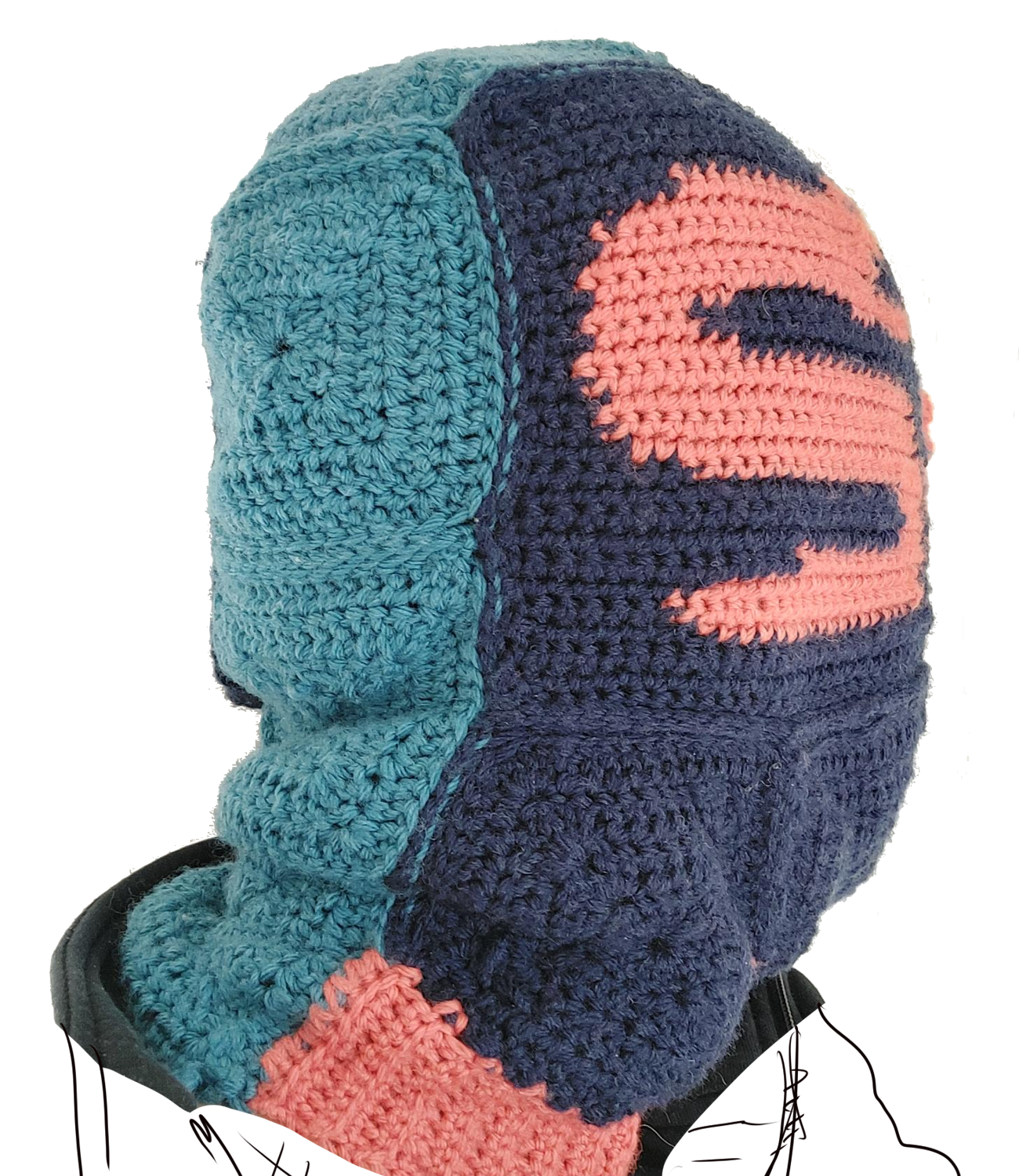
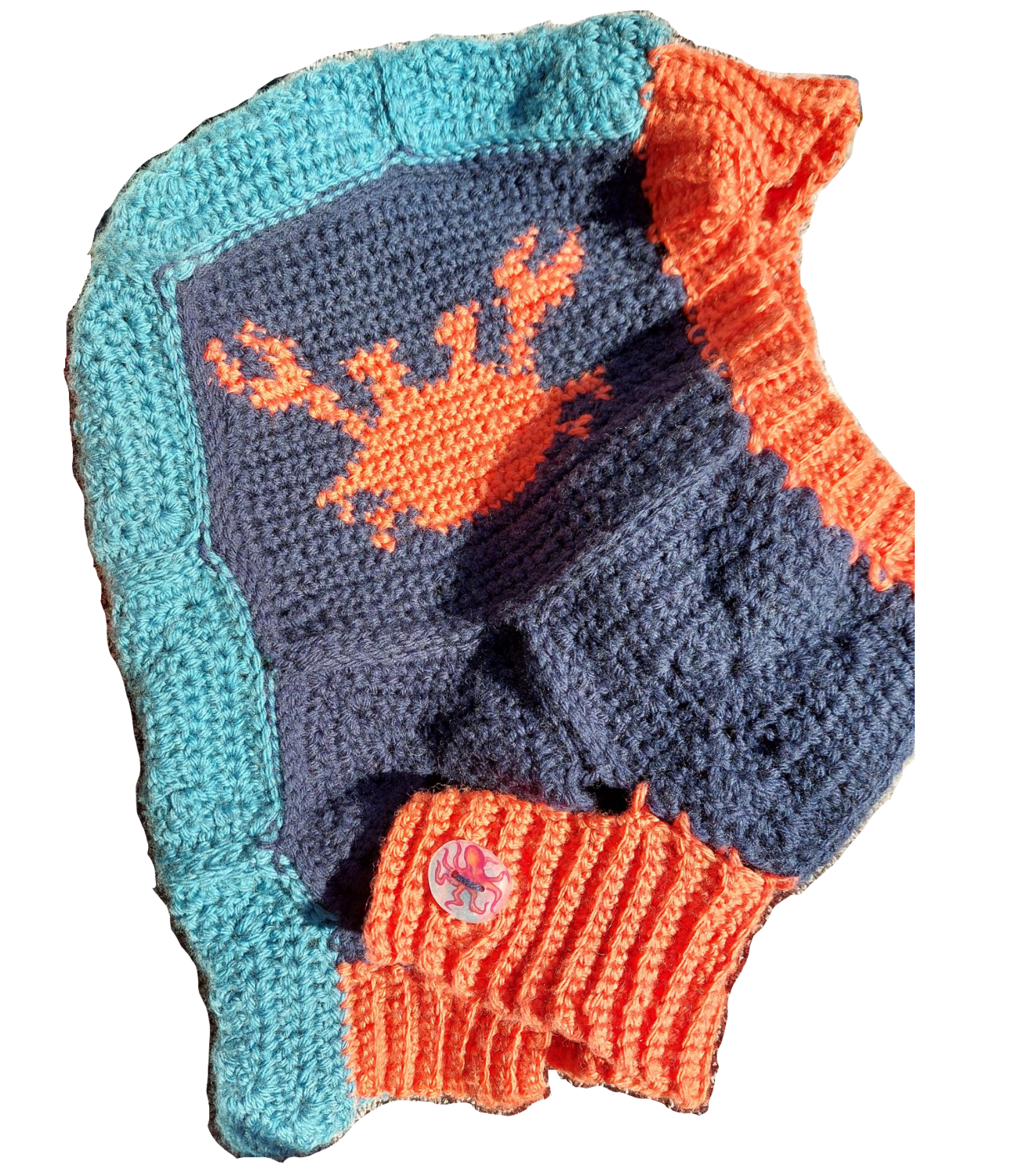
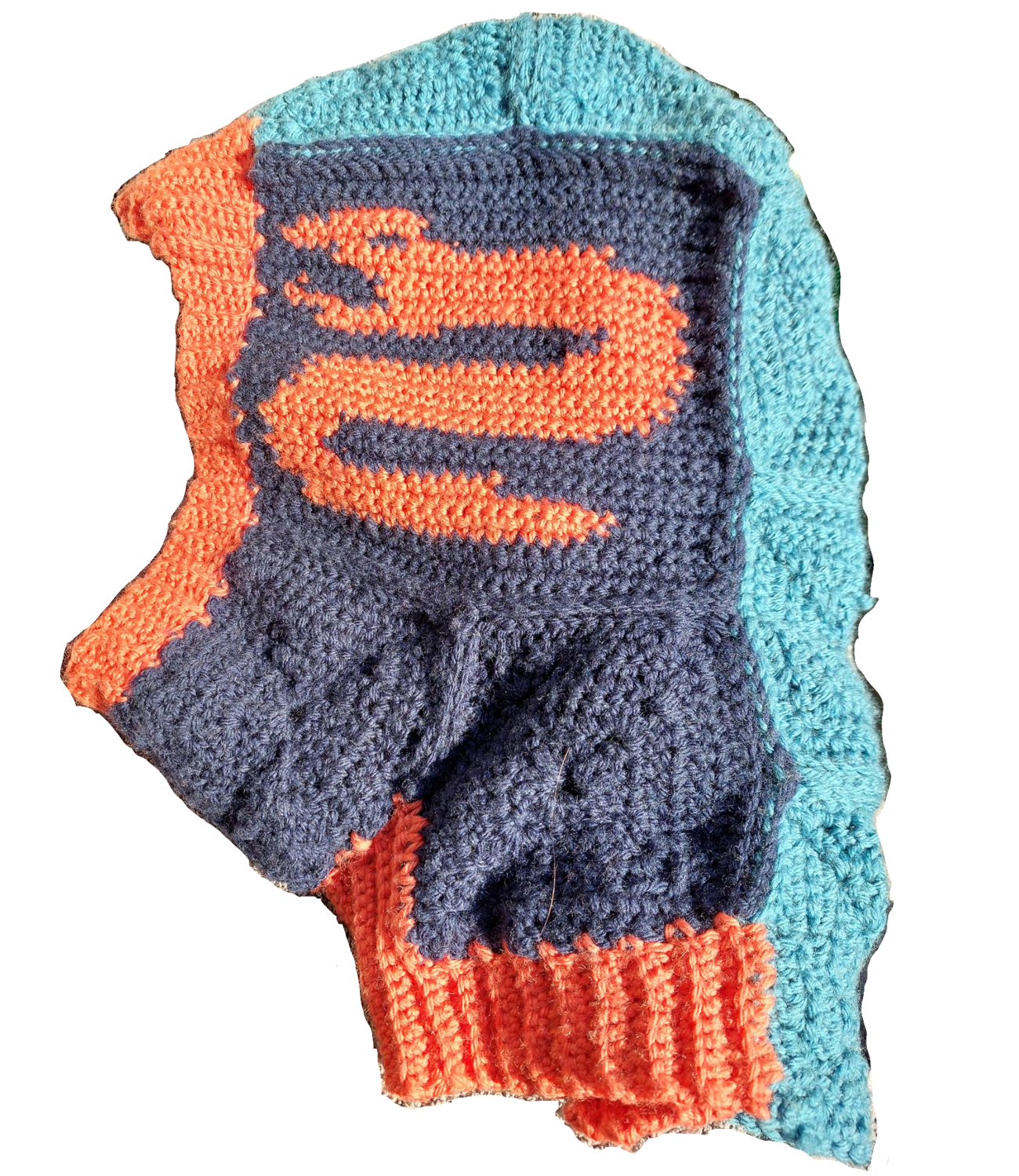
Crab - Snake Balaclava - Pattern

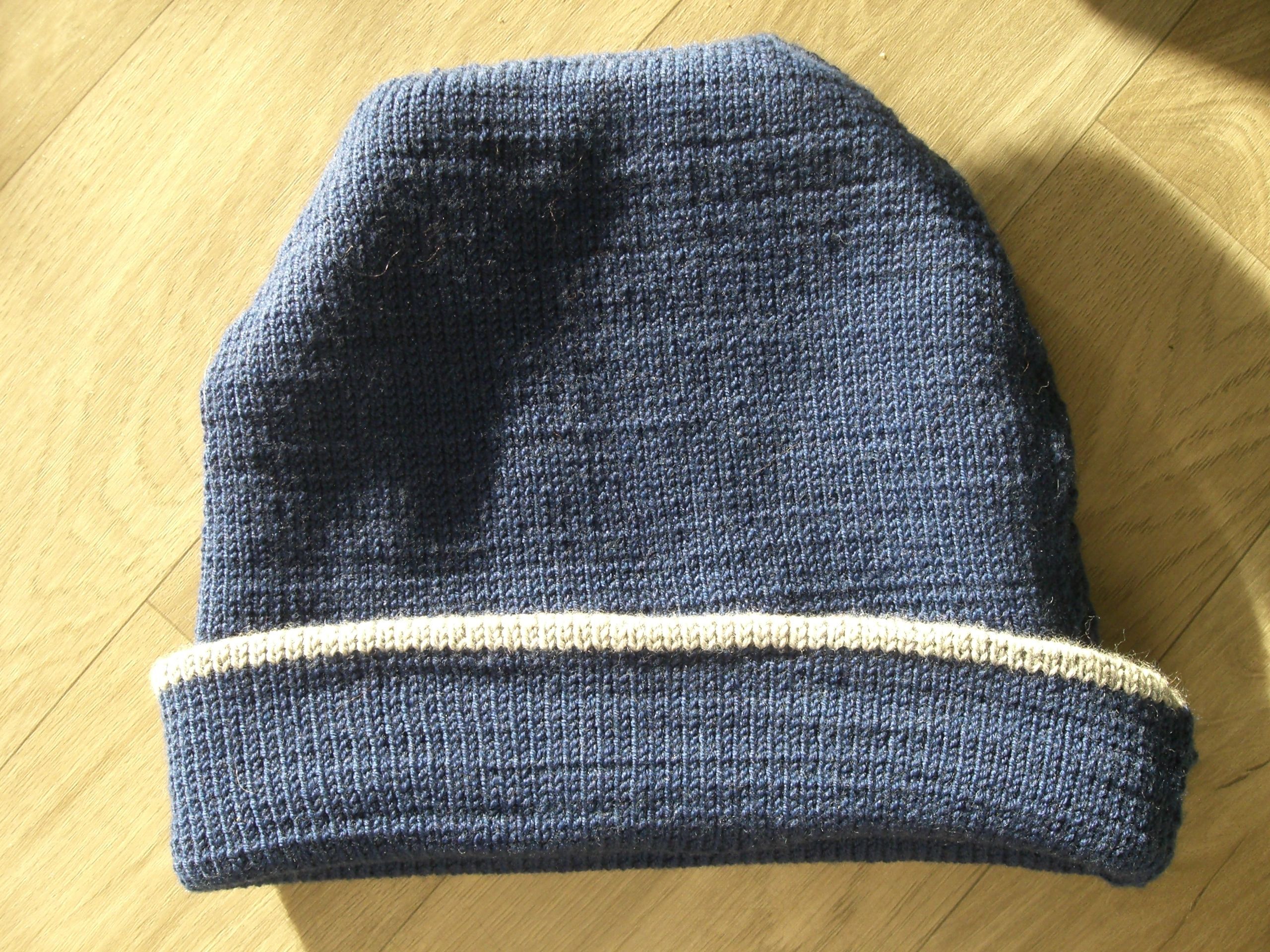
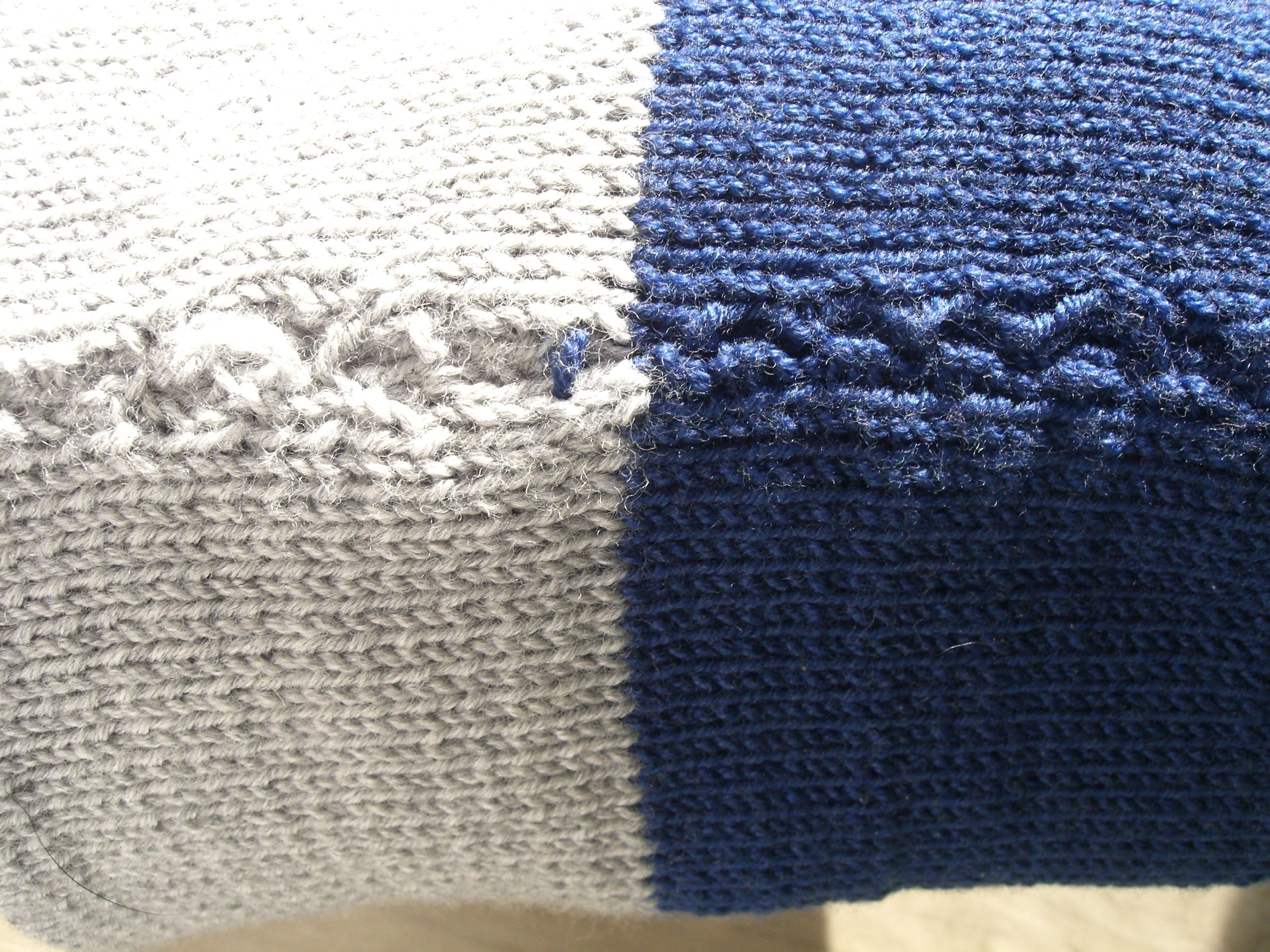
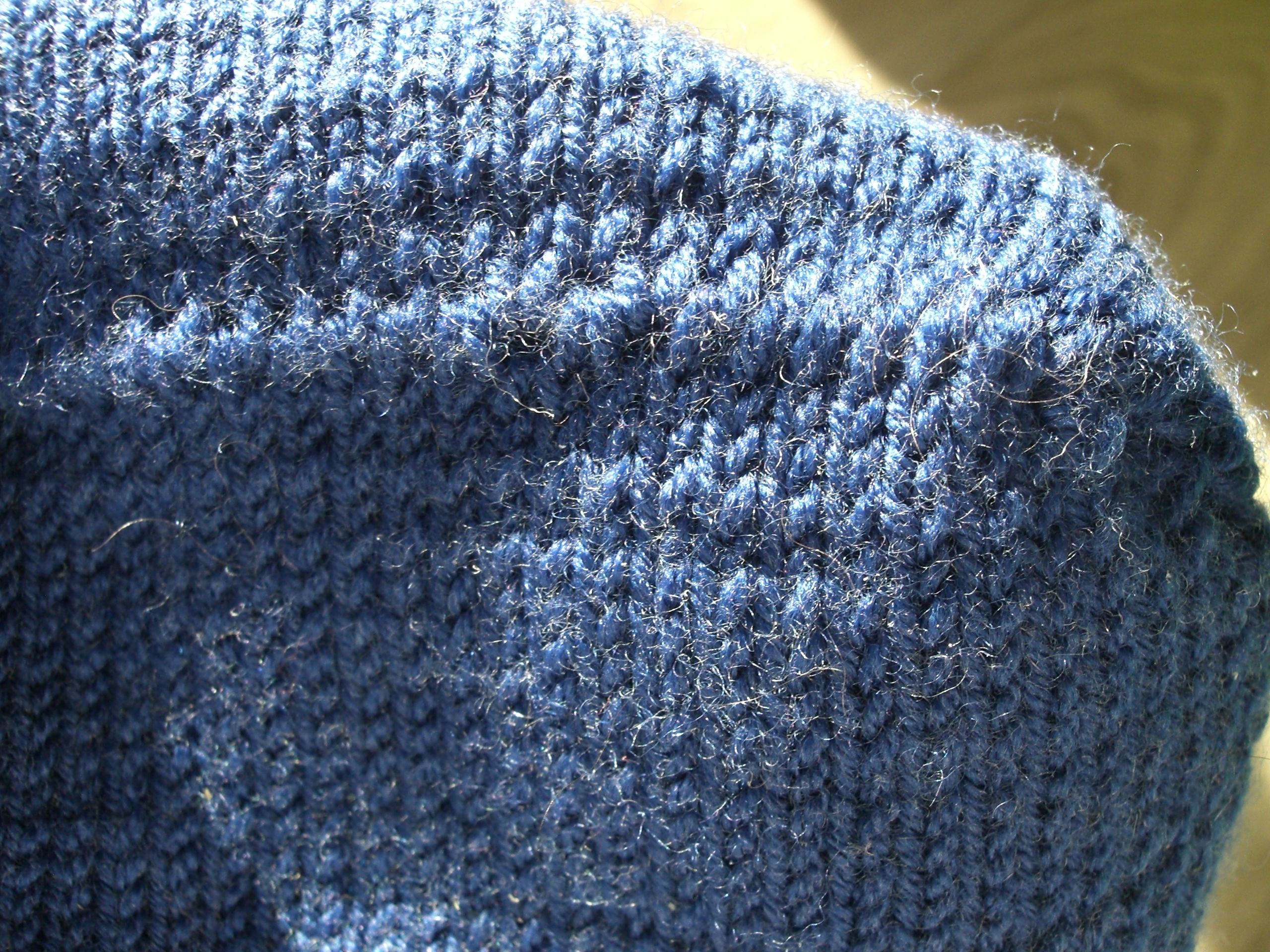
The hood of frost resistance is here! I made this so I can wear my beloved sweater without my neck getting cold. I looked at several patters/finished objects then just made it. I will share the tutorials I used and the charts I made for the crabby and snek.
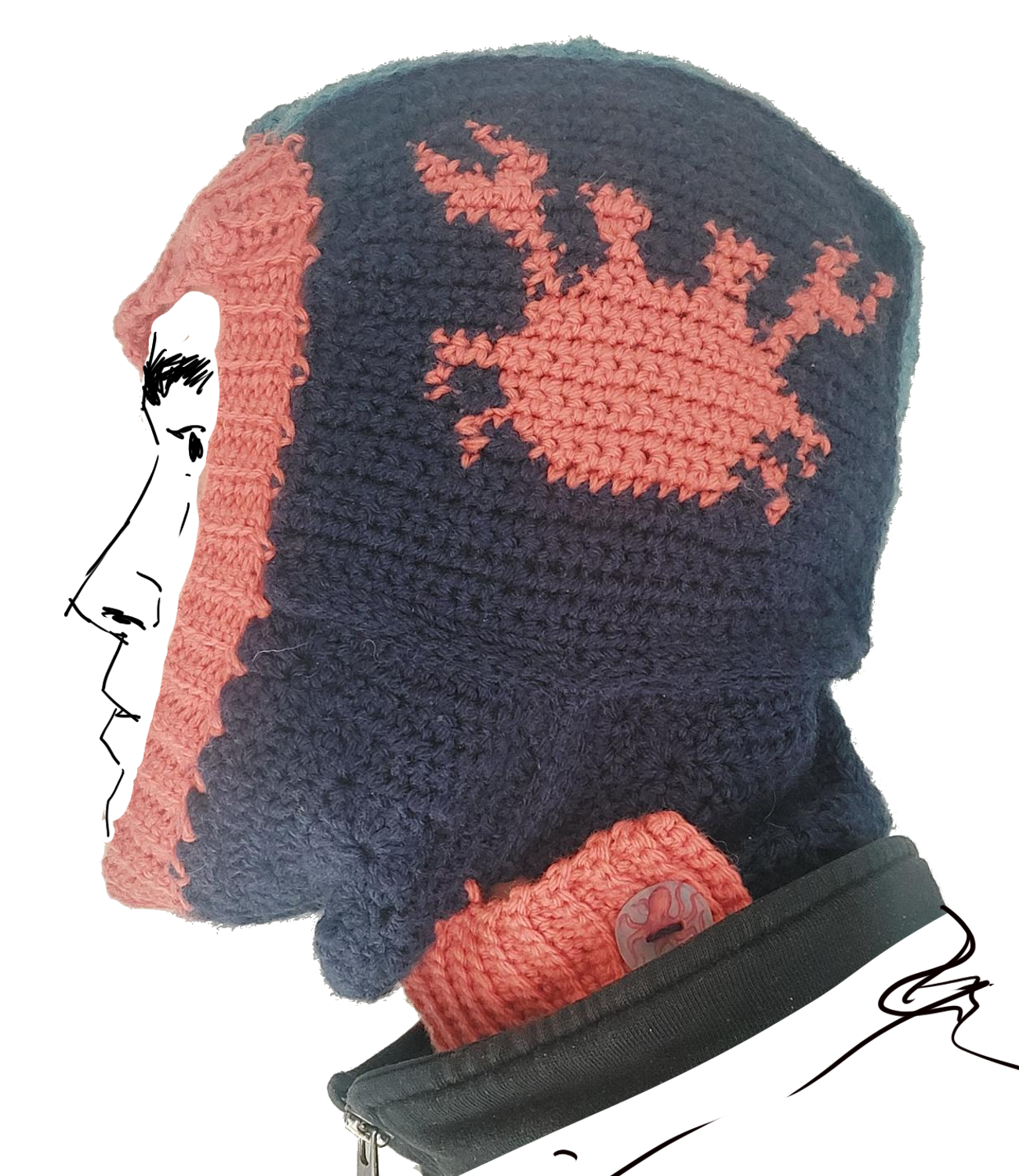
Fyi my head is on he smaller side so it may not fit everyone. Measure, swatch and try on as you go!

  • Yarn: Merino Uno by Lana Grossa (125m/50g)
  • Needed: about 130-150g, if one color (one 50g ball each was enough)
  • Hook: 4mm

Tutorials I used:

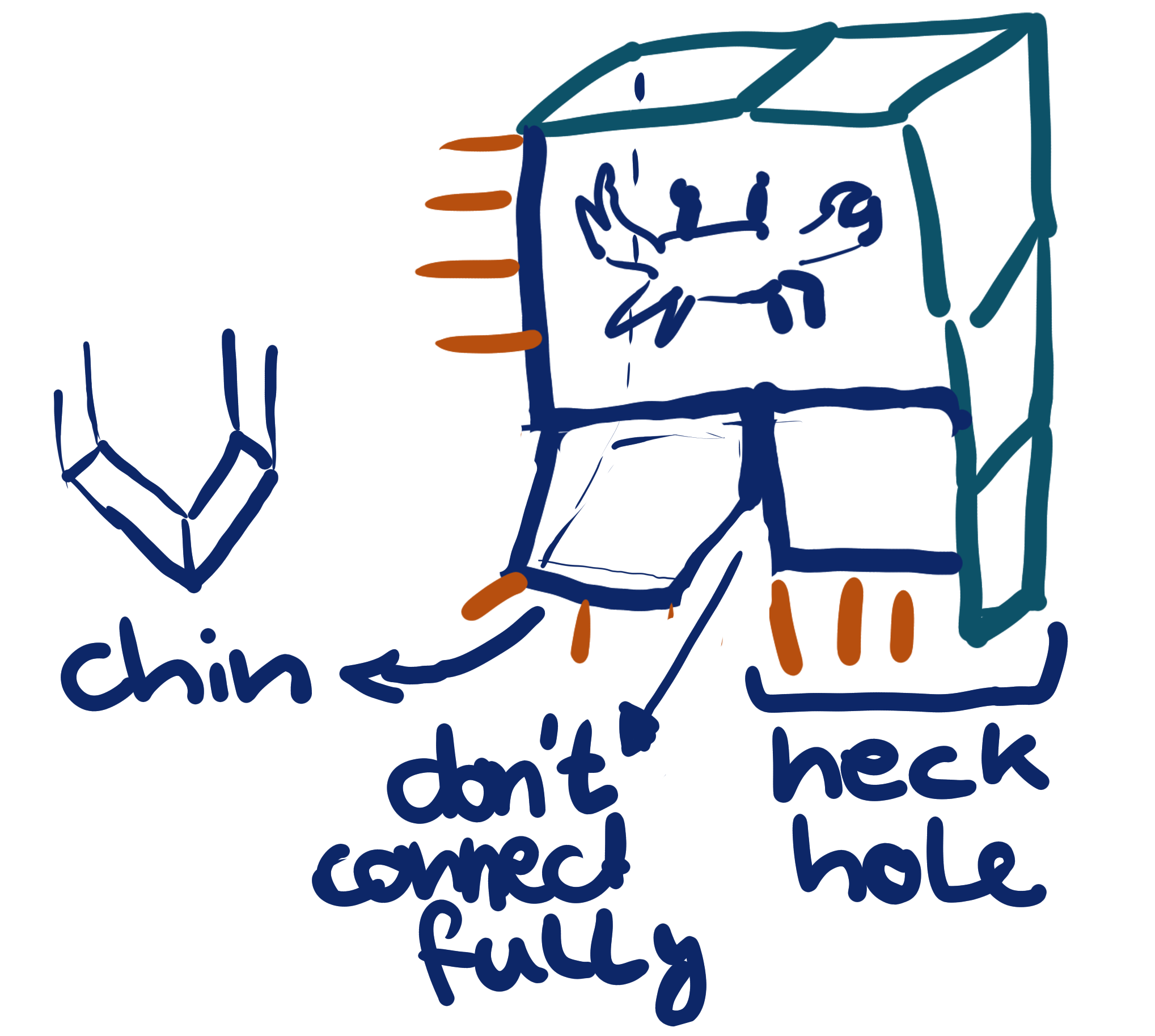
Chin info: you may want to make the chin smaller depending on the fit. I find it a bit too loose. If you do that then you need 2 less dark blue squares!

Parts:

  • 5 light blue squares
  • 4 dark blue squares (2 if you mod the chin!)
  • the two side panels

Side panels:

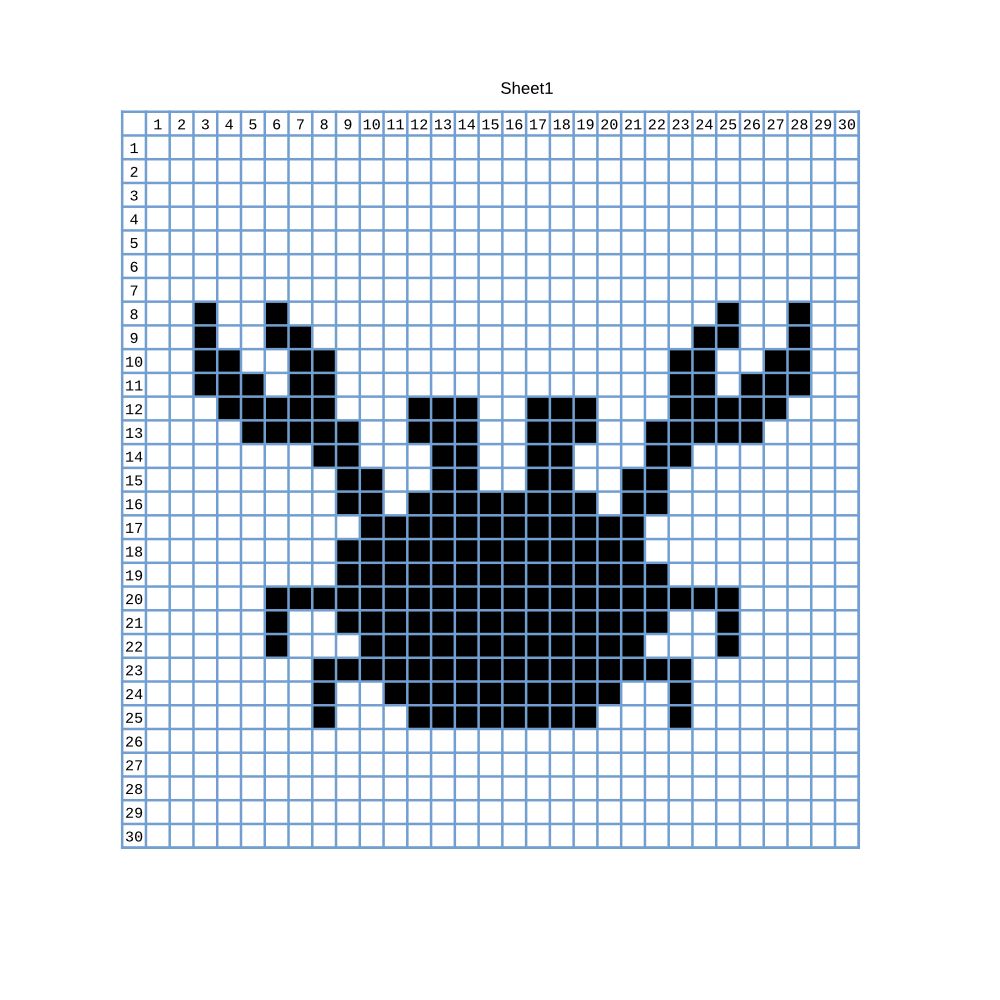
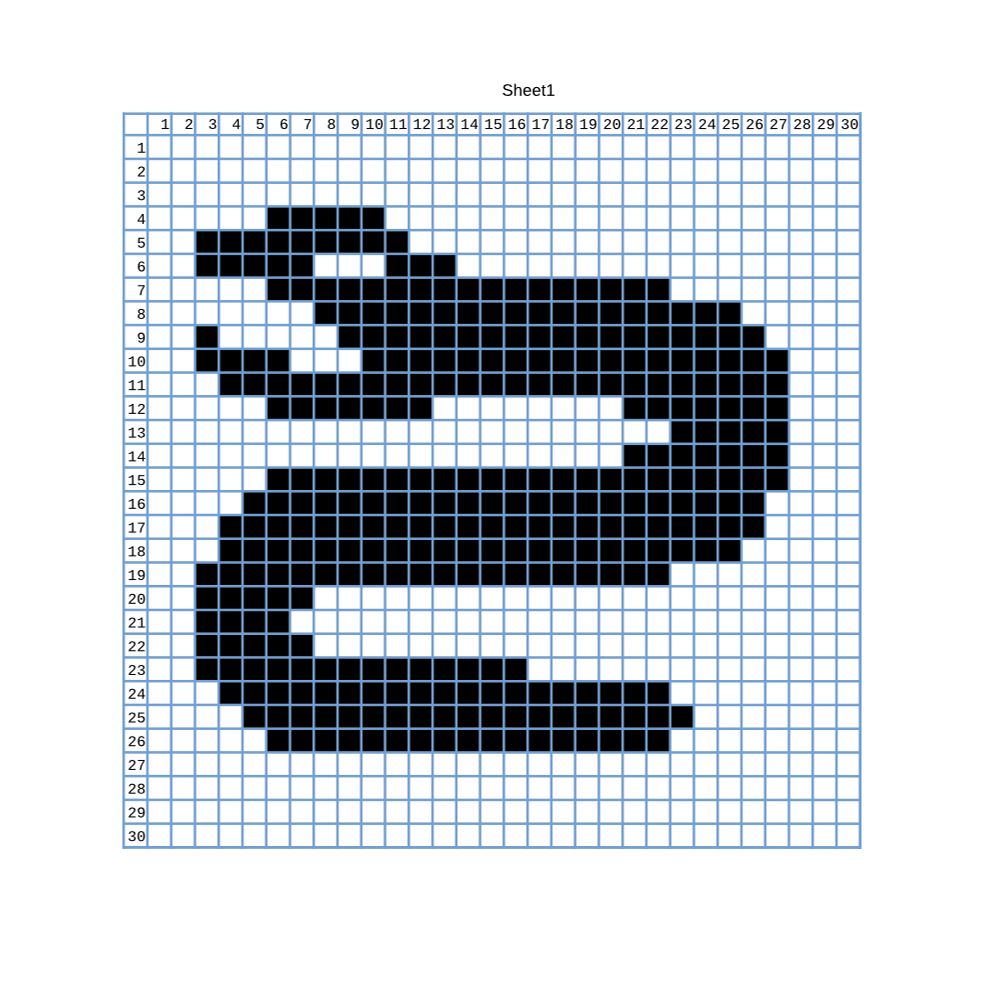
Make them around 30 stiches wide and 30 stitches high! They are easy to adjust if you want to make them a different size! Swatch and measure your head before starting!!!! They both should be the same size. Feel free to download the charts!
Assembly
Ribbing

Once you have every component assemble and time for the ribbing!
For the ribbing I used a needle half a size smaller and did a stitch in (around) every 3-4 stitches.
Around the face I made it 6 stitches high. Around the forehead I recommend making the ribbing longer so it covers the forehead properly. Try on to check for the size! I increased around 6.

Neck

I made it as long as the light blue part. Under the neck .increase as much so it is even on the bottom. I didn't connect it to the other side because it would have been too tight to get on. I continued the ribbing,

Buttonhole

Just skip for example 3 stitches by chaing 3 in one row then continue as usual. The size of the hole depends on your button. Later strengthen the hole by sewing around the edges! Sew on the button and you are finished!
I made the button from this shrinky dinks.

Two more pictures to help with the assembly
Spinning

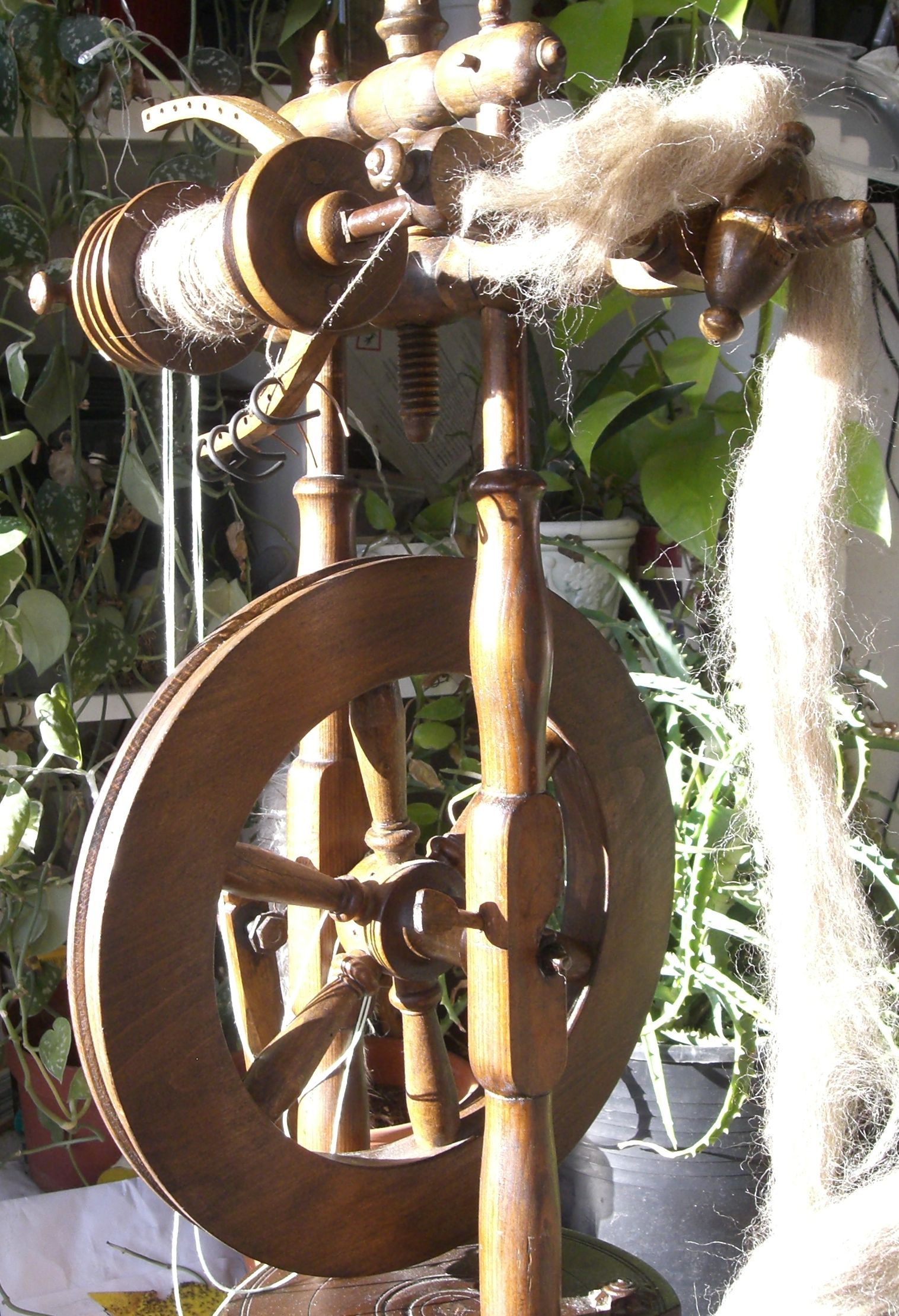
My tools - spinning wheel and spindle

I stared out with a self made spindle from things I had at home. It is made from a bamboo knitting needle, a polymer clay disk, a paperclip and a tiny bit of tape to keep things in place.

My wheel, my beloved and behated.

Made in 1945 November. Wobbly and temperamental.
I picked it up for 15 euros. It wasn't in a usable state. I had to change all the leather bearings, where the metal meets the wood. I used some vegetable tanned leather, which I cleaved to the right thickness and cut to the right length. In order for it to be able work as a bearing the leather has to be hardened so it can keep its shape. I held it into boiling hot water for 10-20 seconds with some looped zip-ties for the right shape then took out make sure the shape wasn't changed! The last step was to soak them in oil to moisturize.
I had to re-glue some parts of the wheel and not all of them hold....... I will have to find a solution for that soon.

Yarns of 2025

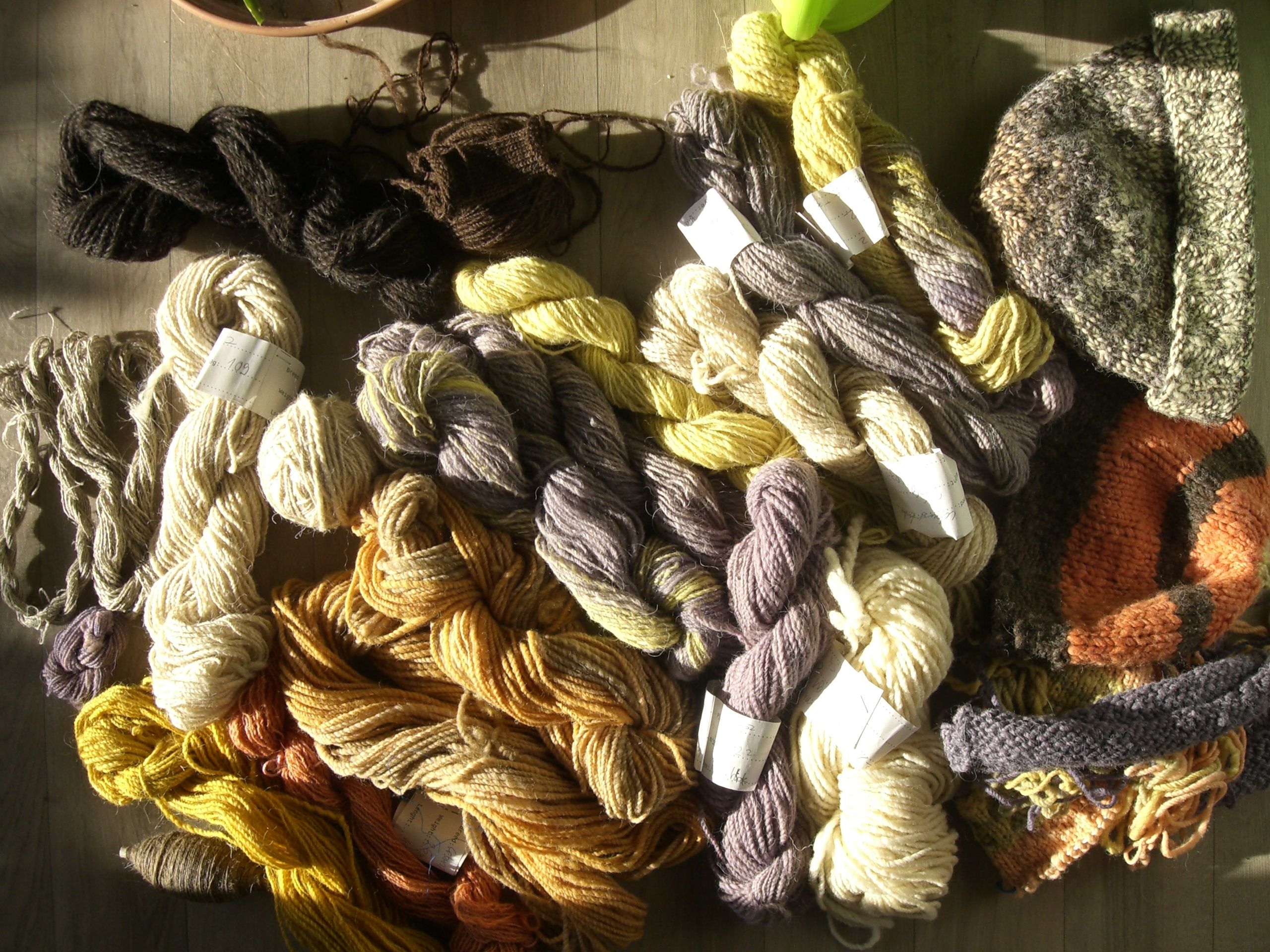
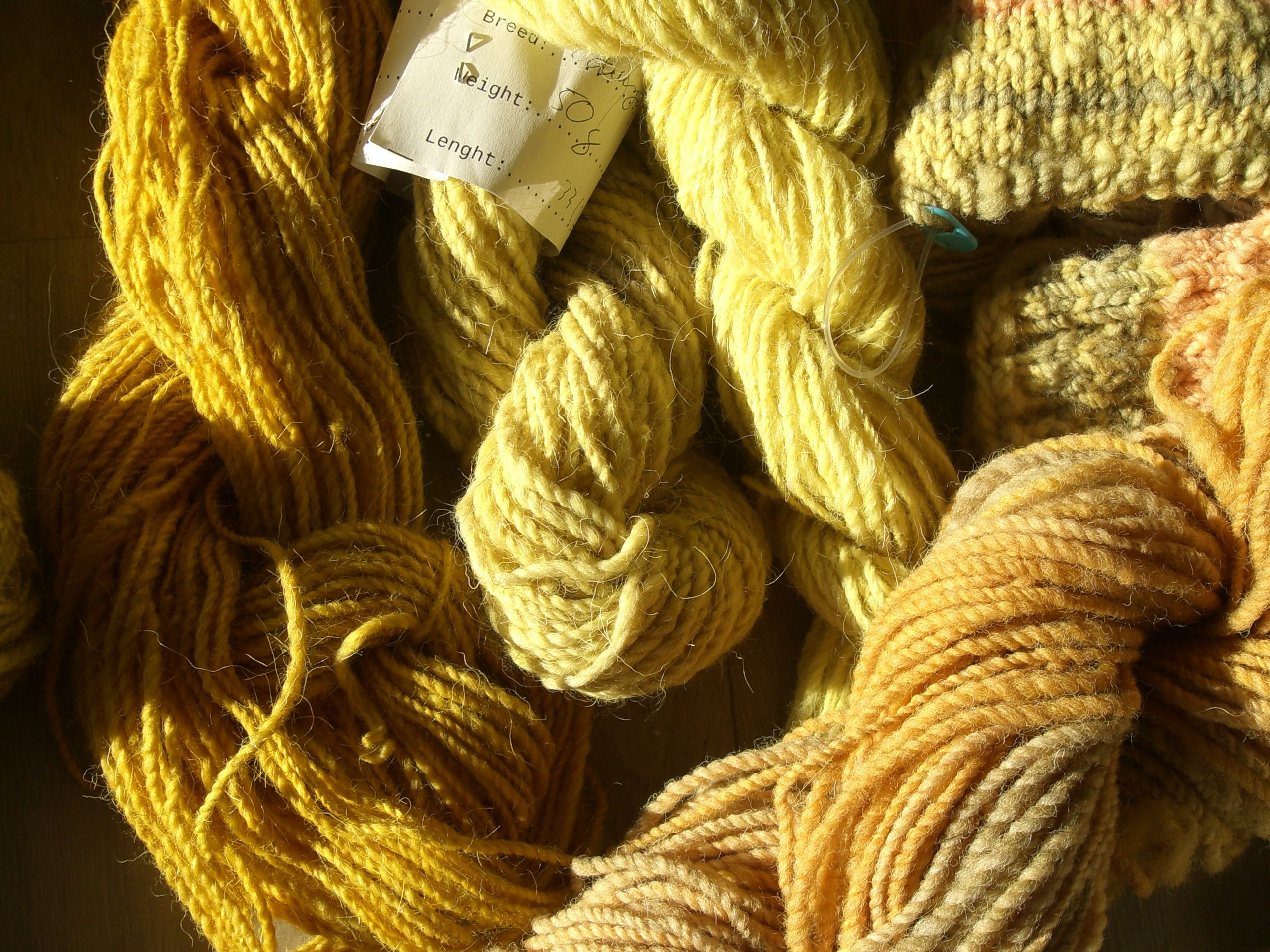
A little recap of what I spun this year! I got into spinning at the beginning of 2025 and here we are! This is not all but most of the yarns I made. All dyed one were dyed naturally, using madder, onion skins, goldenrod, nettle and log wood!


Some of the highlights:

The yellows!

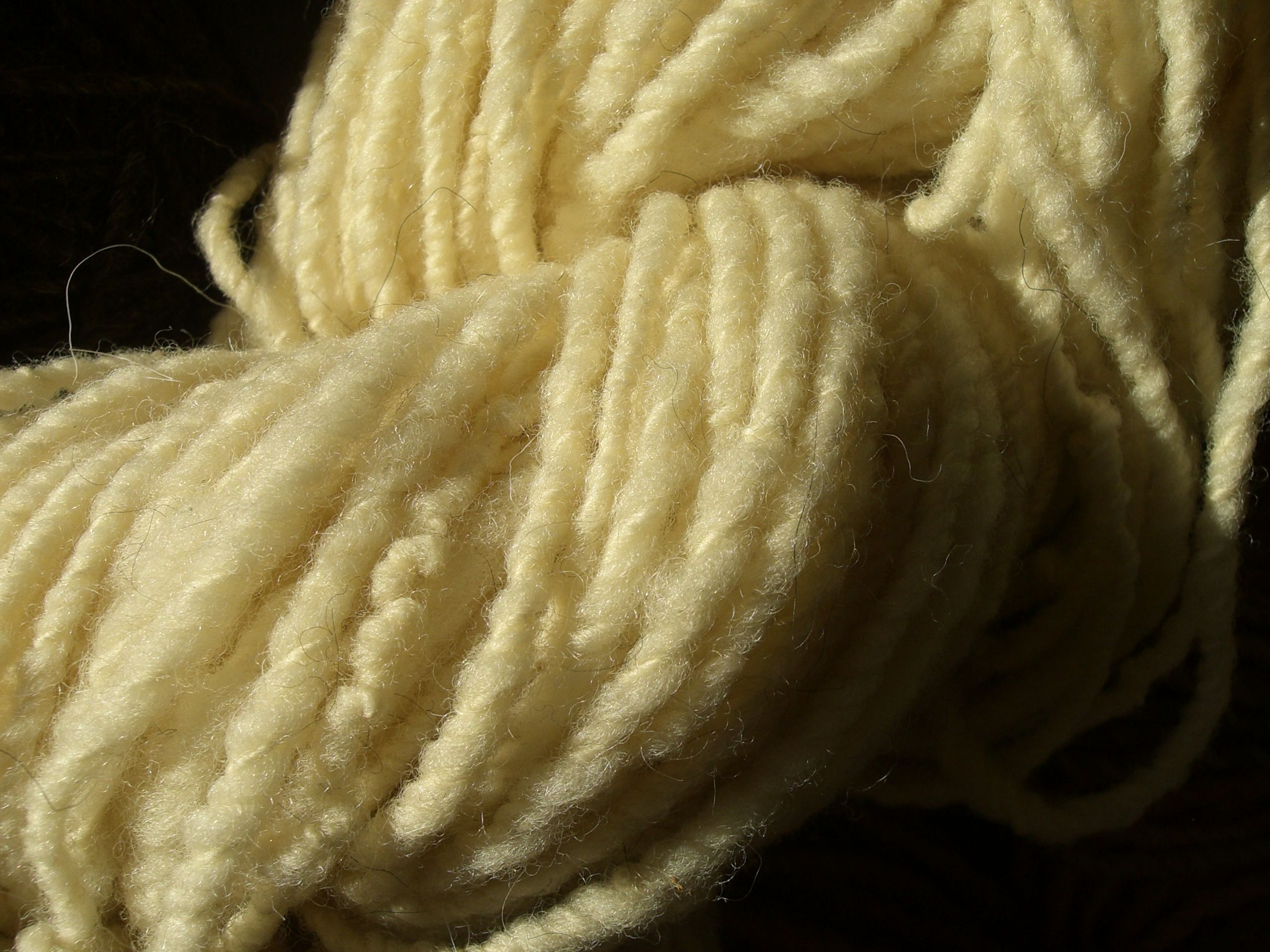
3 ply very stretchy merino (ZZS plied S)

3 ply sock yarn, Cheviot and Devon, dyed with goldenrod and log wood.

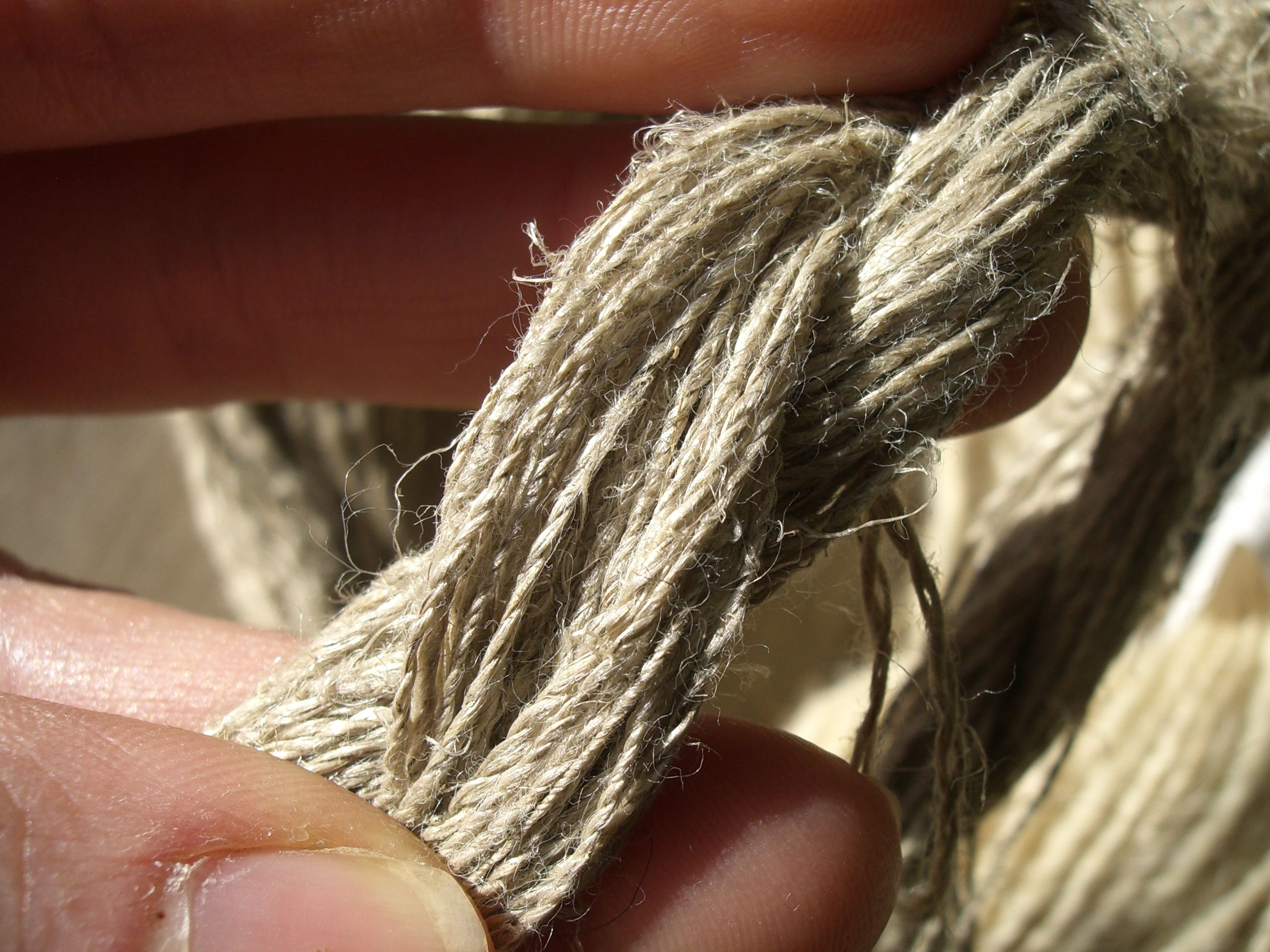
I figured out flax!!! This was one of the most satisfying spins!

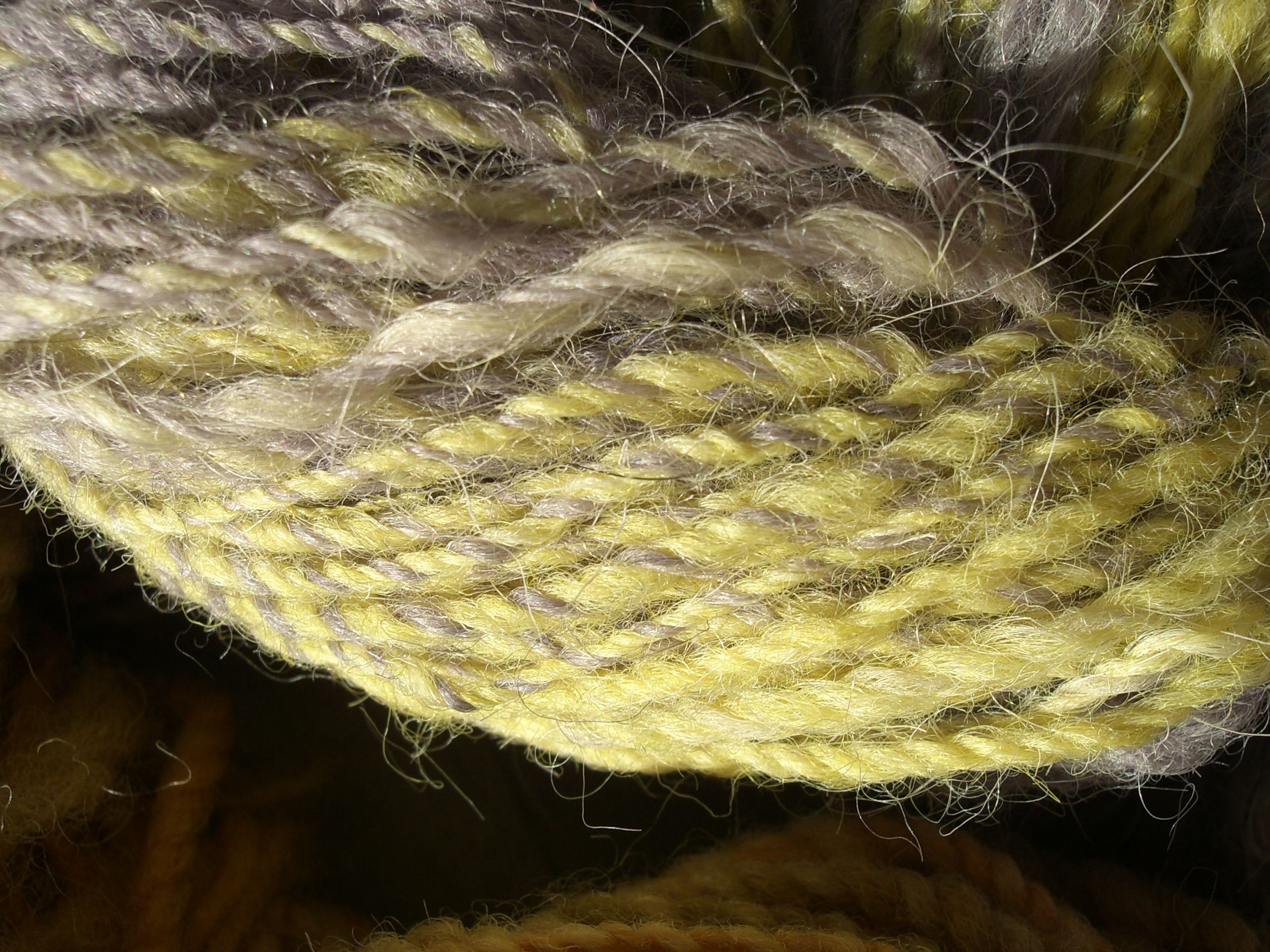
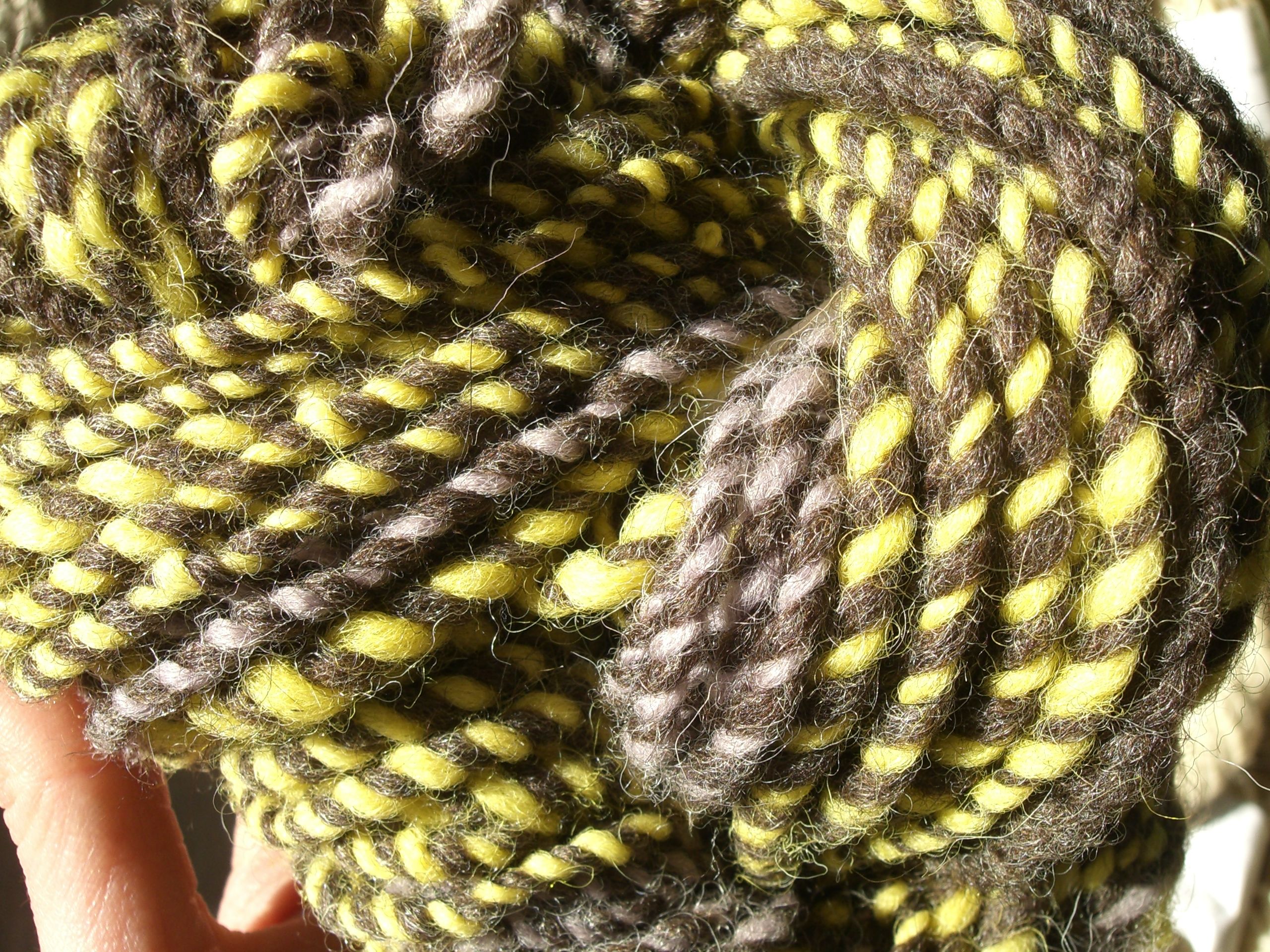
The yellow from goldenrod flowers is crazy I'm glad I plied it with a naturally brown wool.

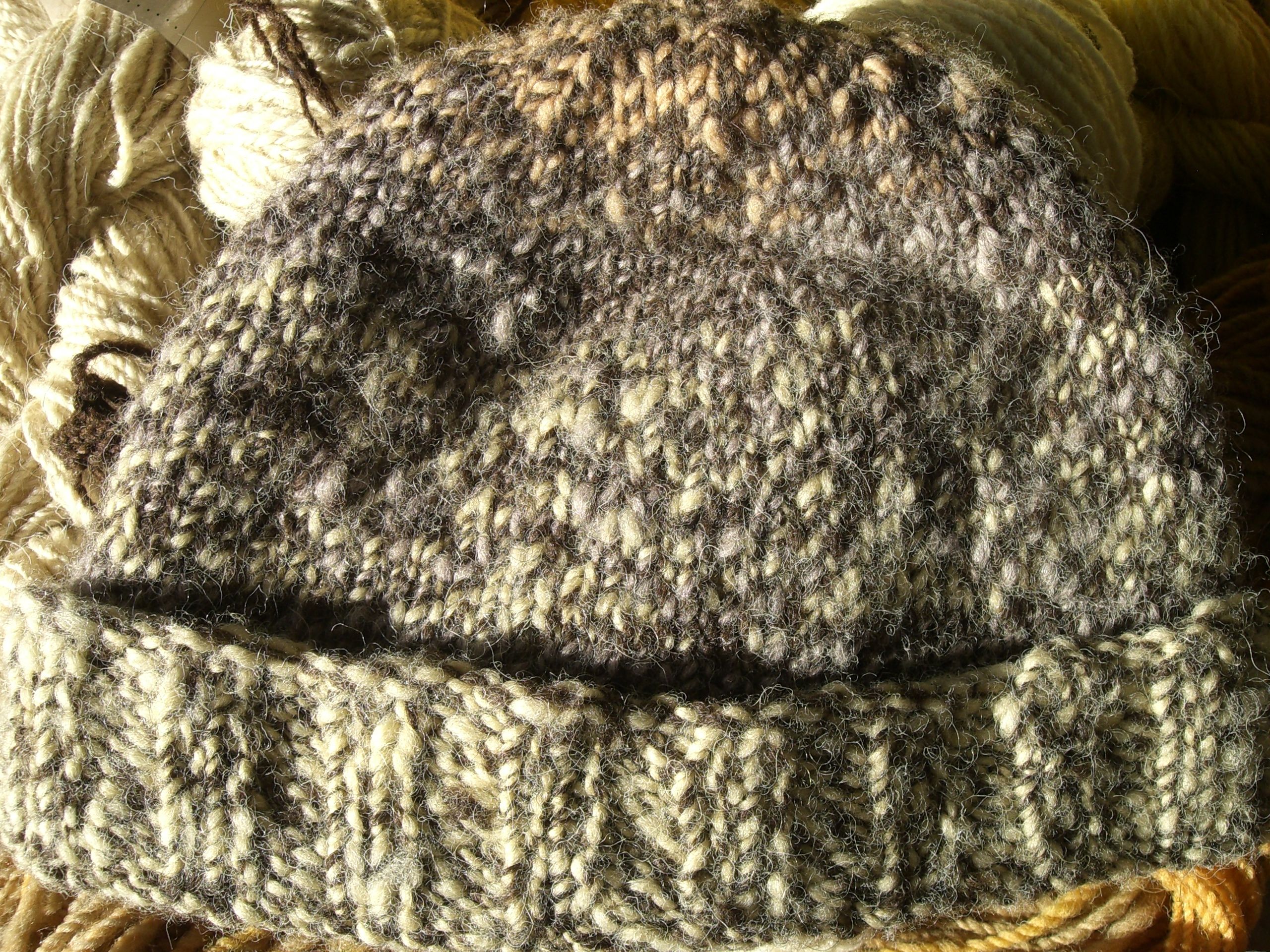
The color swatch beanie! Top to bottom: madder, log wood, nettle!

Knitting machine

The Machine - Knittax S7

(images will follow)
I got this machine for 25€, it belonged to someone's deceased grandma. It was in very good condition only two of the needles were broken!
It is a 4,5mm standard gauge machine, it could have a ribber attachment but that wasn't included. The construction and mechanics of this machine are very similar to the more popular Knittax M2. However it has a similar yarn feeding and holding attachment as the AM (automatic) models. I don't have all parts for that but i can't imagine it working well, because for a consistent fabric you need consistent tension on the yarn, so I have been laying the yarn manually onto the needles. It is easier this way and have no more dropped stitches.

Cleaning and maintenance

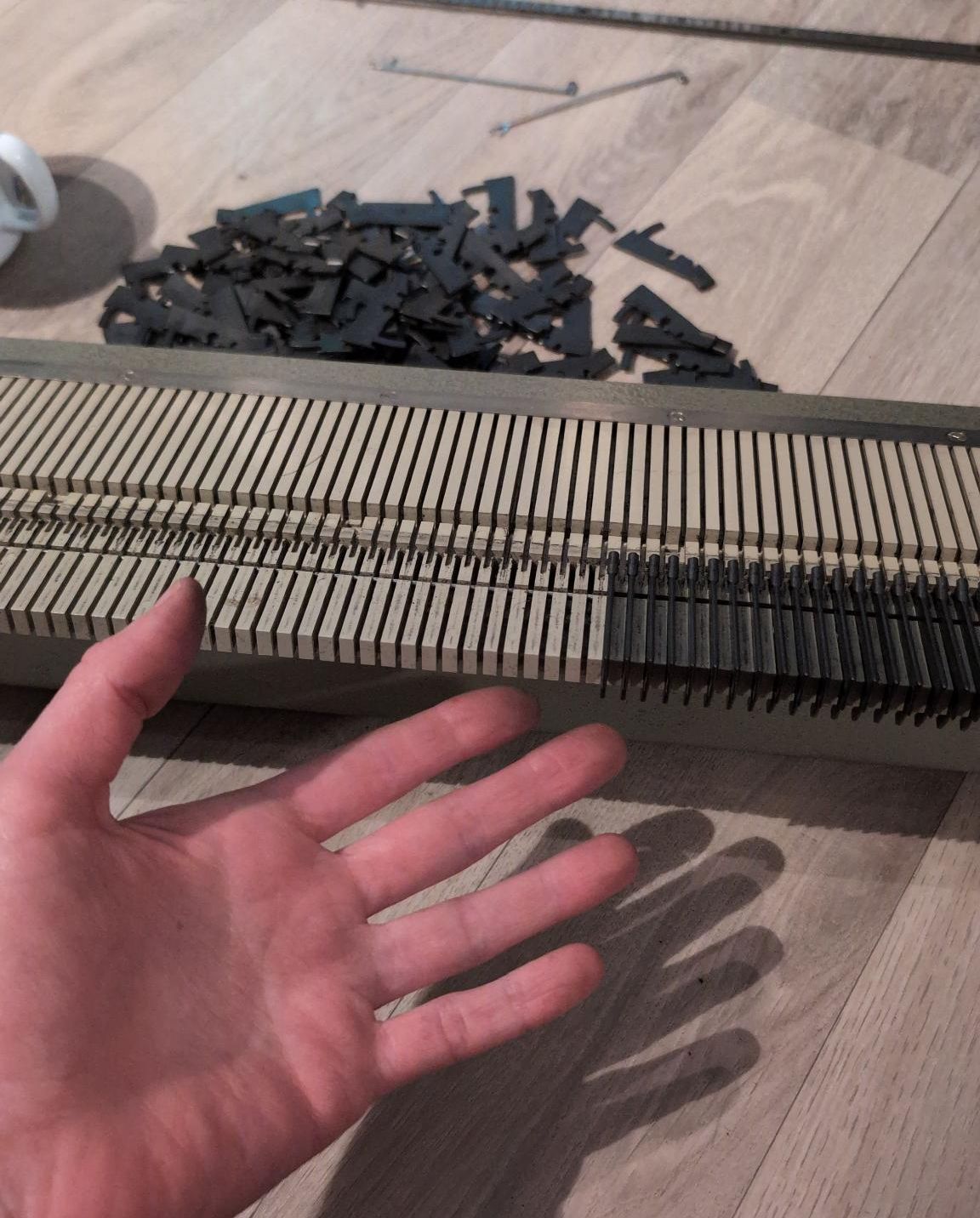
Taking apart the machine is very simple in involves removing few screws bit it can get very time consuming and tedious, especially putting it back together.
The Needles are held down by the metal bar, with the numbers on it, and removing that will let one access all the needles, underneath the needles is a small canal, going parallel to the length of the machine and in that is a thin piece of yarn/felt strip topped with a plastic strip. This makes sure so the needles don't slip down when knitting.
The little plastic plates are attached to body of the machine by a small spring that puts tension on them. The hold the fabric down. That is why this machine doesn't need any weights!! You can access them by removing the front panel. To do that the two small screws holding down the front panel have to be removed then the three screws under one of the side caps have to be loosened (not removed!) and the cap can be wiggled loose. Now the front panel can be removed.
The plates and springs can be removed by pressing them together then moving the plate to a side and the spring should pop out.
In this state can the machine, the needles and the plates be fully cleaned. It took me around two days...
Assembly... this will take longer then taking the machine apart. Make sure the needles aren't loose when putting the front panel back bc that can be a bit flimsy.

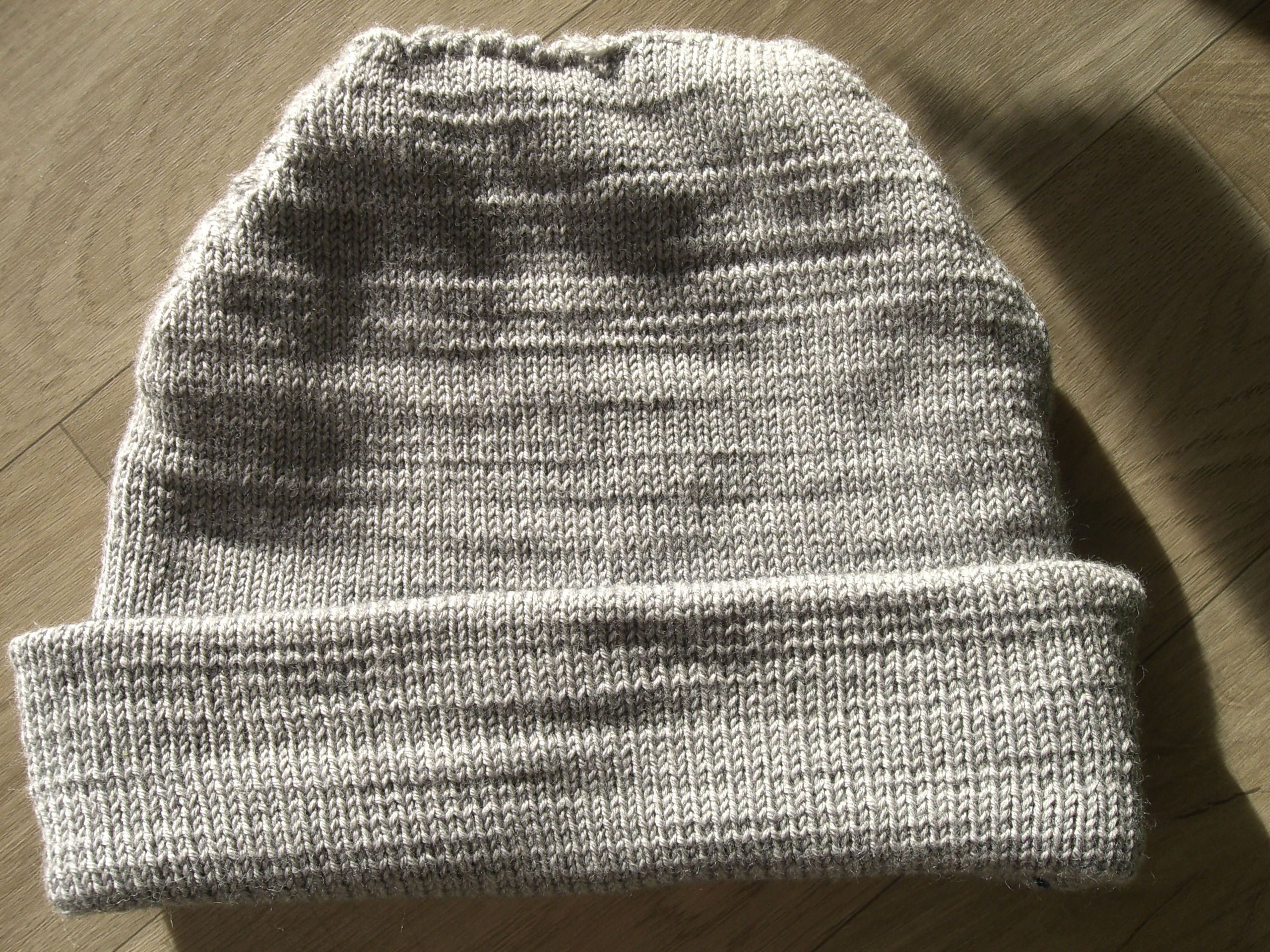
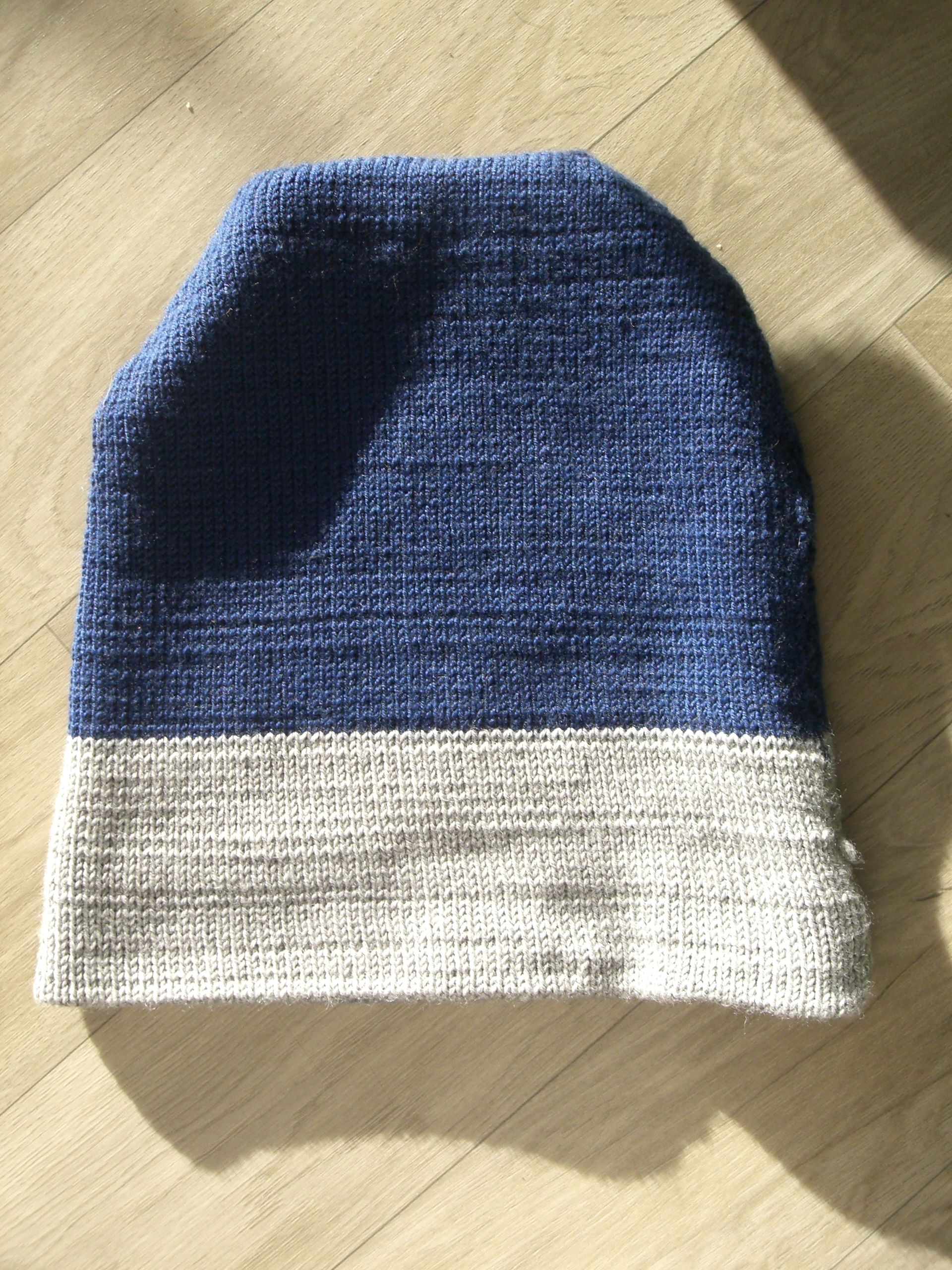
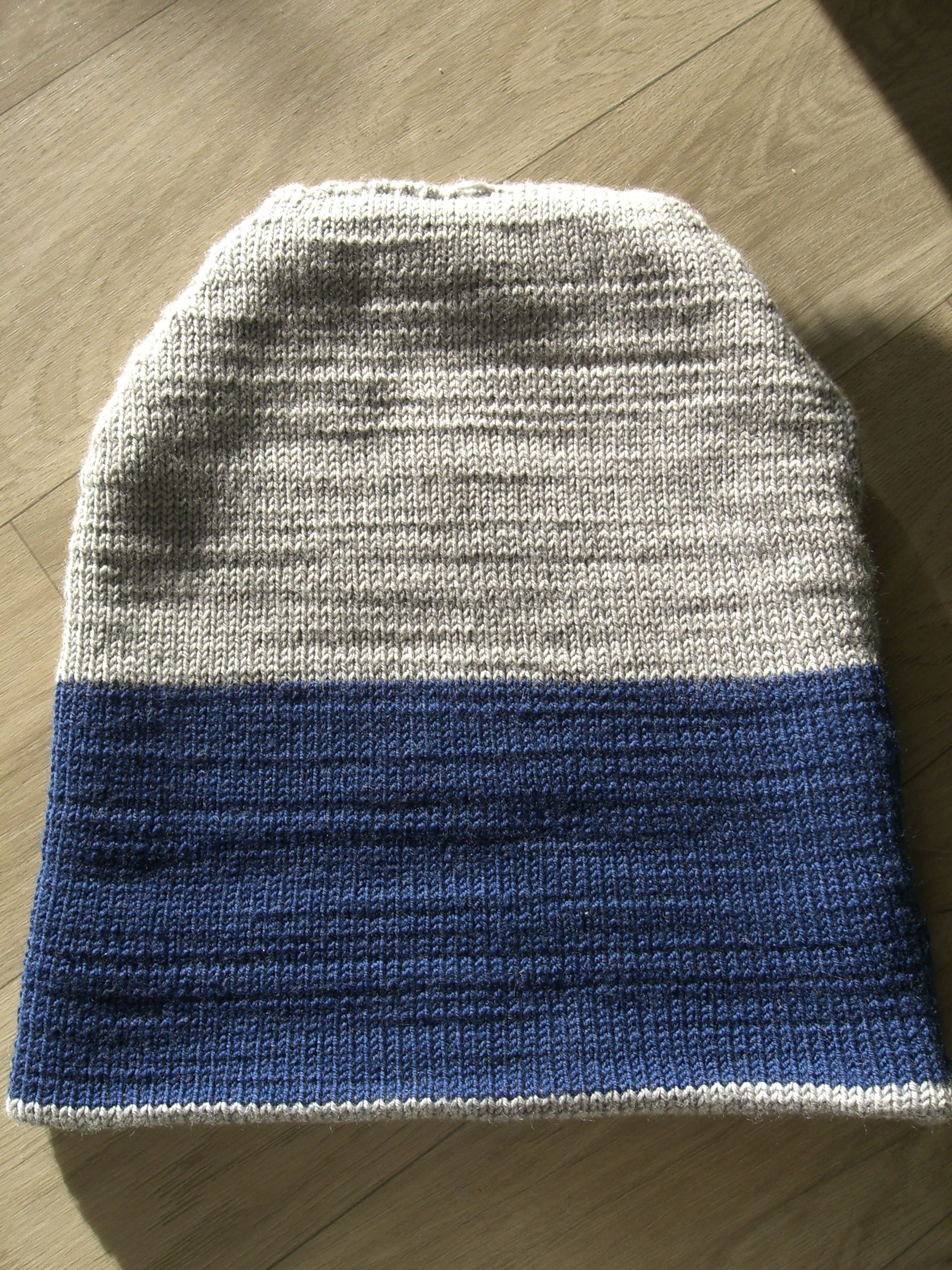
Double layer beanie with a shaped crown (Documentation)

Ver.1
I wanted some crown-shaping but also two layers, I couldn't find a pattern so I reverse engineered my own by using a commercially made beanie!
Using a swatch is extremely important for the right sizing and it makes sense to as few stitches for the seams and for the fact that it is a much thicker fabric! (Speaking from experience....)

Using a swatch is extremely important for the right sizing and it makes sense to as few stitches for the seams and for the fact that it is a much thicker fabric! (Speaking from experience....)

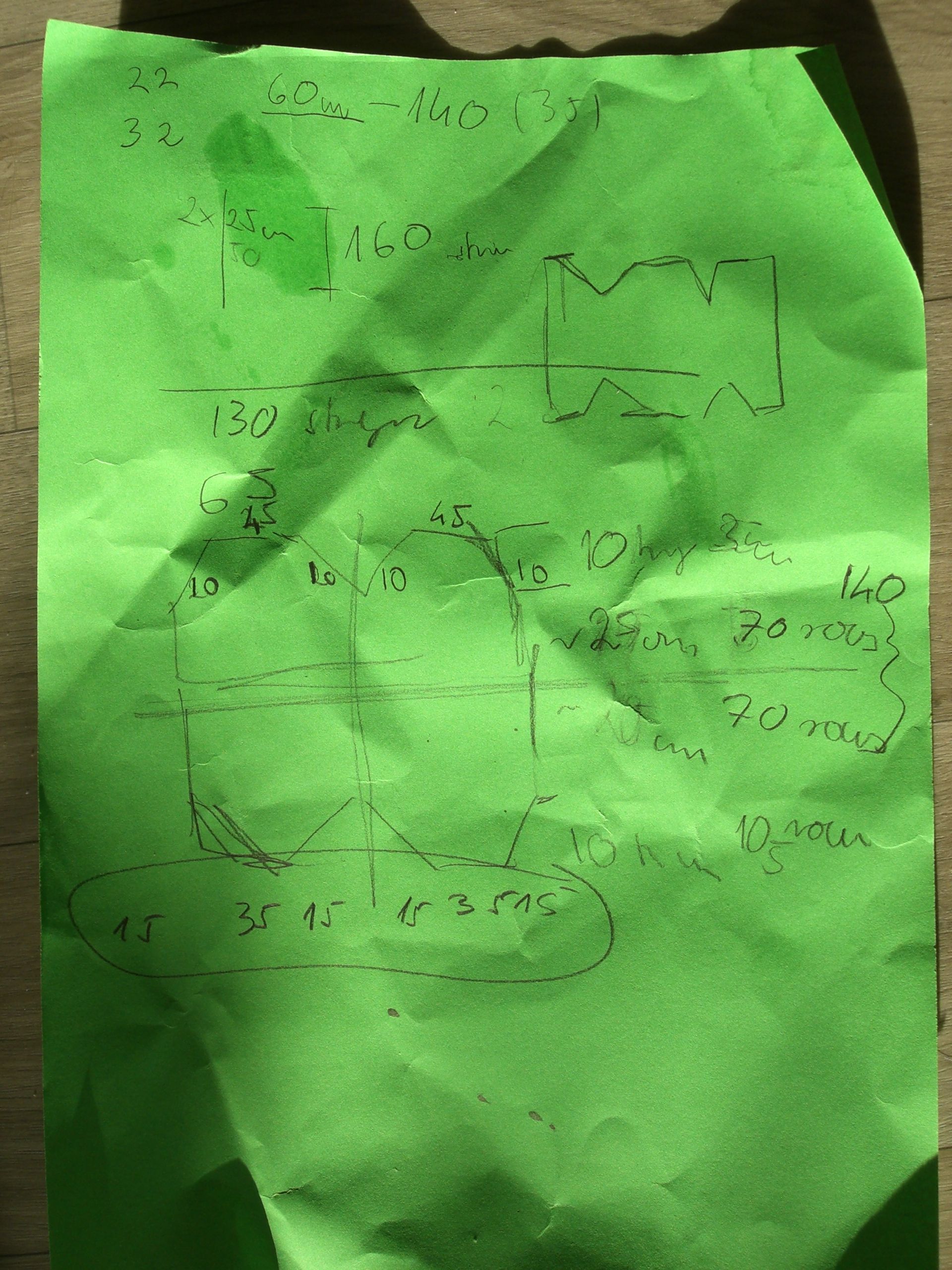
The math:

my notes and sketches <3
the shape of the top and the bottom of the knit fabric is the same.
.__ .__
/..\/..\ this one
If the slope is x stitches then the top is 2,33 x in the case if this hat (15;35) Probably anywhere between 1:2 and 1:3 should be a good ratio, tho I'd personally would stay around 2,2-2,7. It all depends on the gauge. This ratio will also determine the height of the crown decrease!
Started with x stitches and did an increase with each row. I laid the two strands of yarns onto the two groups of needles at the same time and knit them with each pass, like as if it was intarsia.
I started with waste yarn and also ended with waste yarn too.
Assembly: I sewed the side seams together then grafted one of the tops, leaving one top as the last, so the beanie can be tuned inside out. After grafting the last seam I sewed the top corners together so the fabric doesn't slip apart while wearing.

What I would change:

Due to the shape of the head I would move the back seam in the middle of one of the straight areas. This may make the knitting more complicated but the hat would fit better.
´_´ __´ _
| \/ .\/ | this shape would result in a more anatomically correct fit and with the seam on the back side. (ignore the ´ how does one properly display ascii art even)

Using my handspun with the machine

tba

Dyes - Synthetic

The free dyes!

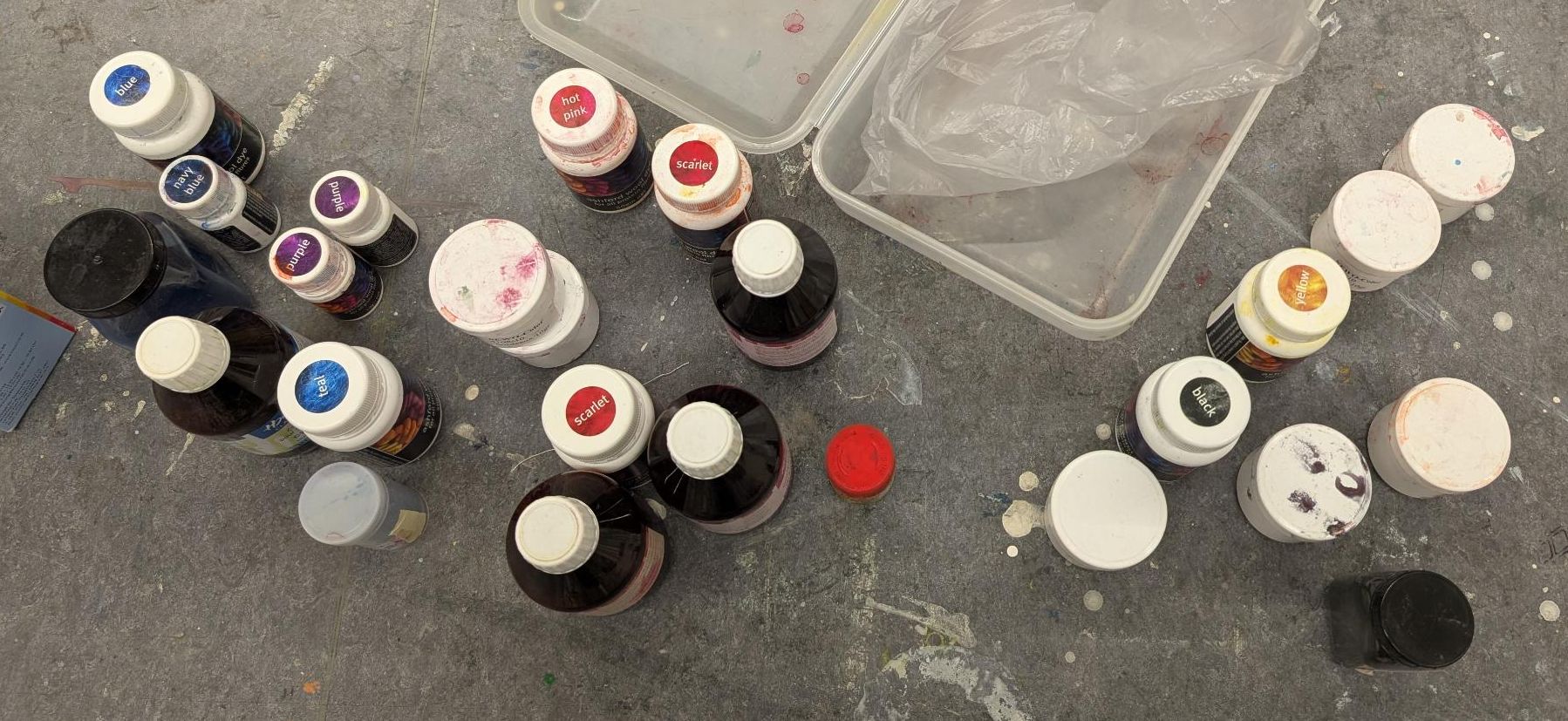
So someone was giving away bunch of acid dyes for free and of course I had to pick them up (these are expensive!!!!). The train ride was 1,5 hours to pick them up but it was 100% worth it, I have so much!!

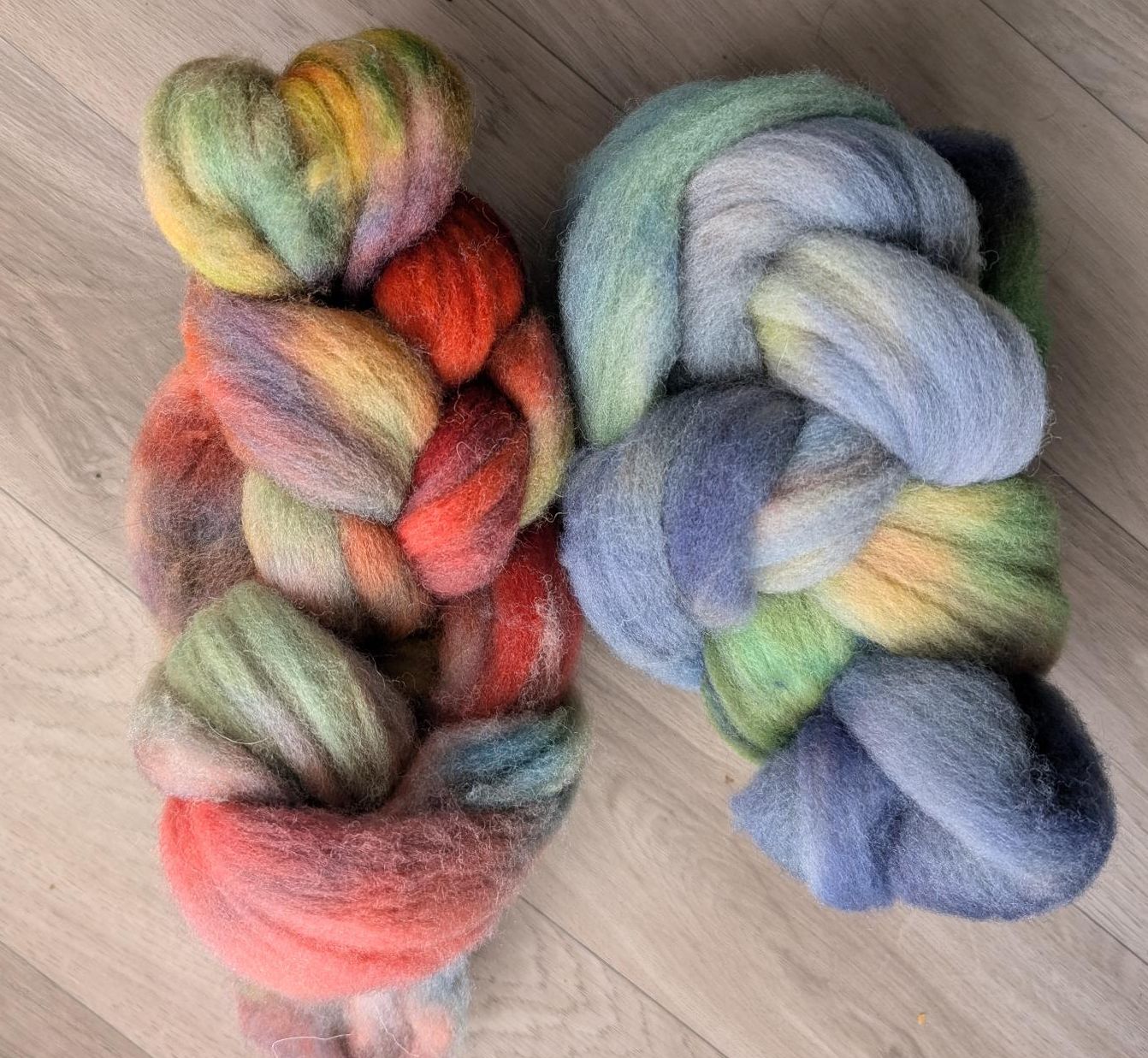
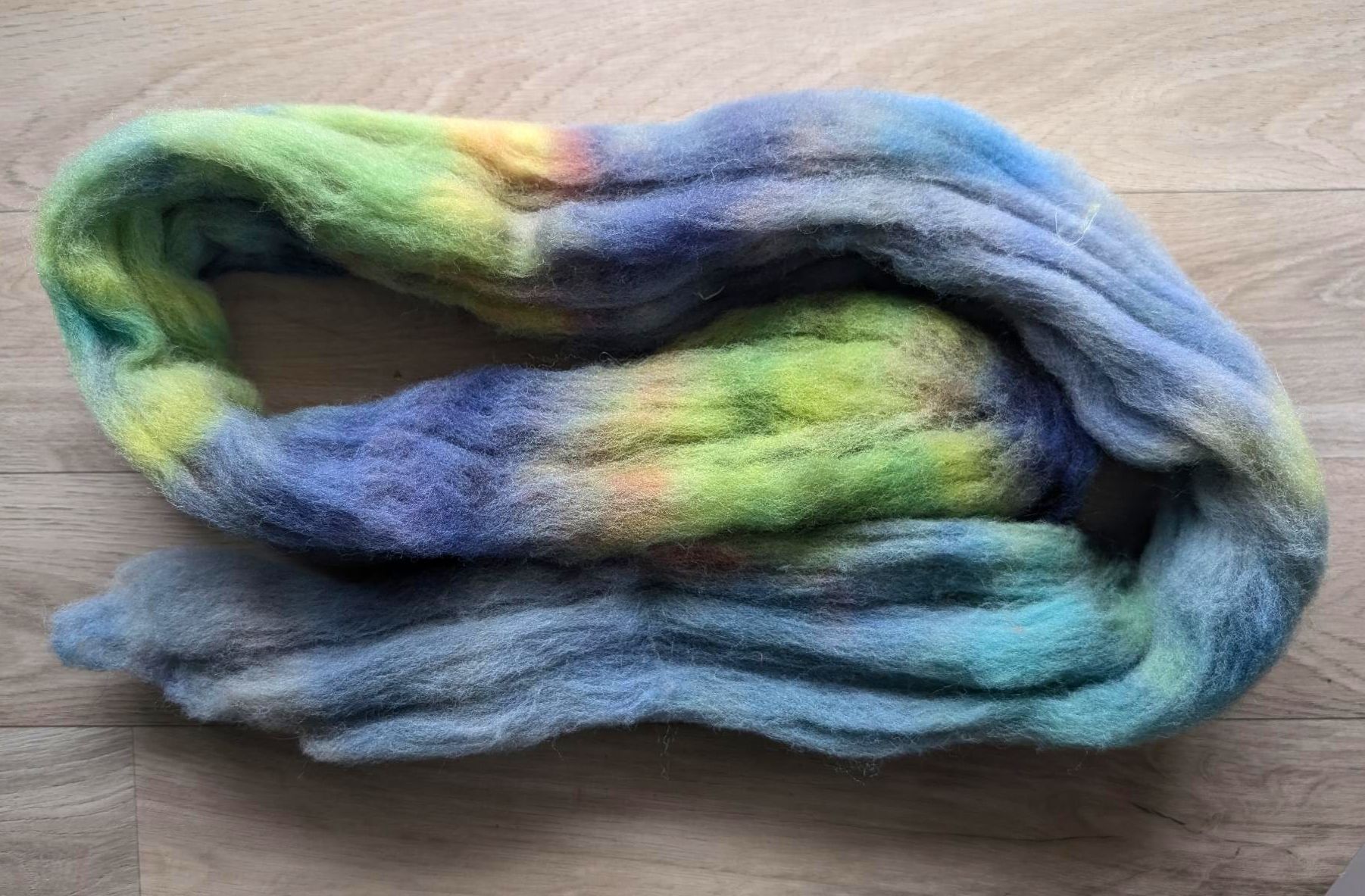
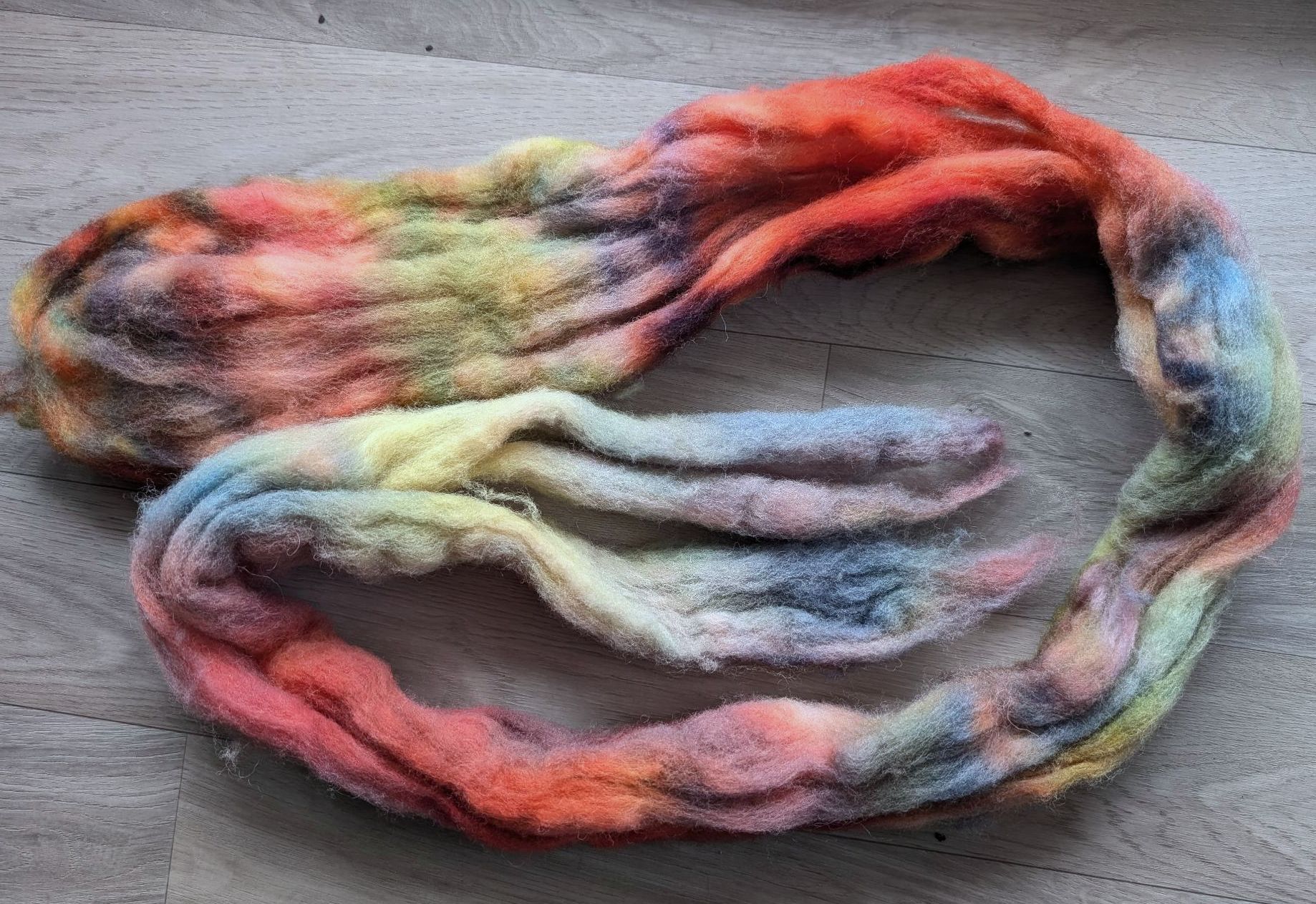
I dyed 2 X 50g of meriono wool, in the "just fuck it up" style. My scale isn't accurate enough for this and I could not find out what acidity the dyes need. All say use X amount of vinegar but what concentration? It comes in 5% 15% 20% or even 25% (from what I have seen yet.) Also the acidity of ones tap water can change things up! So the first batch didn't set properly due probably too low concentration of acid.
The other lesson I learned that the blues I have like to get absorbed very fast meanwhile the red will take its sweet time, so dyeing purple has to happen with overdyeing.

The first attempt. In my head I was going for the purple-green color scheme of one of the EVAs from Neon Genesis Evangelion, but oh well the red... However I really do like these colors too, so I am happy with the outcome!

Number 2. Higher acid concentration and also tested the red alone by itself, I got reds now! So colorful and bright! I had 0 plans for this but it did turn out nice so I am happy with the results!

Dyes - Natural TBA

Mordants

Mordant is a chemical that helps the dyes bind to the fibers better. Commonly used ones are Alumn, Iron, Copper, Tannins. Is it necessary to use mordants? No but then the colors may be less intensive and/ or light fast. They can be used alone or combined for different results. So far I have used Alumn and Iron.

Alumn:

is in Aluminium salt that is commonly used by dyers, it is also used in some cosmetics. Mostly non-toxic.
To make the mordant bath I usually use 10-14g per 100g of fiber. I dissolve it in very hot/ boiling water in a well ventilated room while wearing a mask! When putting the alumn into he water there will be some vapors which are not good to breathe in.

Iron:

I bought some ferrous sulfate but rusty water can be use too! I usually add the iron after the fibers had some time to soak in the dye bath. I mix 1-4g per 100g of fiber in a separate container then add it to the dye bath. The reaction will happen fast so it is important to check on the fibers every 10 minutes. Here becomes important what kind of fiber one has! For wool it is not recommended to let it soak for more than an hour because this can cause the fiber to become more brittle. Plant fibers can soak a bit longer.

Onion skins

Nettle

Madder

Logwood

Golden rod